Complete Smile Replacement
Dentures in Orange, CA
Restore your smile and confidence with custom dentures.
Dentures are a trusted solution for replacing multiple or all missing teeth, helping restore function, appearance, and confidence. Modern dentures are designed to look natural and fit comfortably for everyday use. At Smart Smile Dental, dentures are customized to support your lifestyle and long-term oral health.
COMPREHENSIVE AND GENTLE DENTISTRY UNDER ONE ROOF
Dentures at Smart Smile Dental in Orange, CA
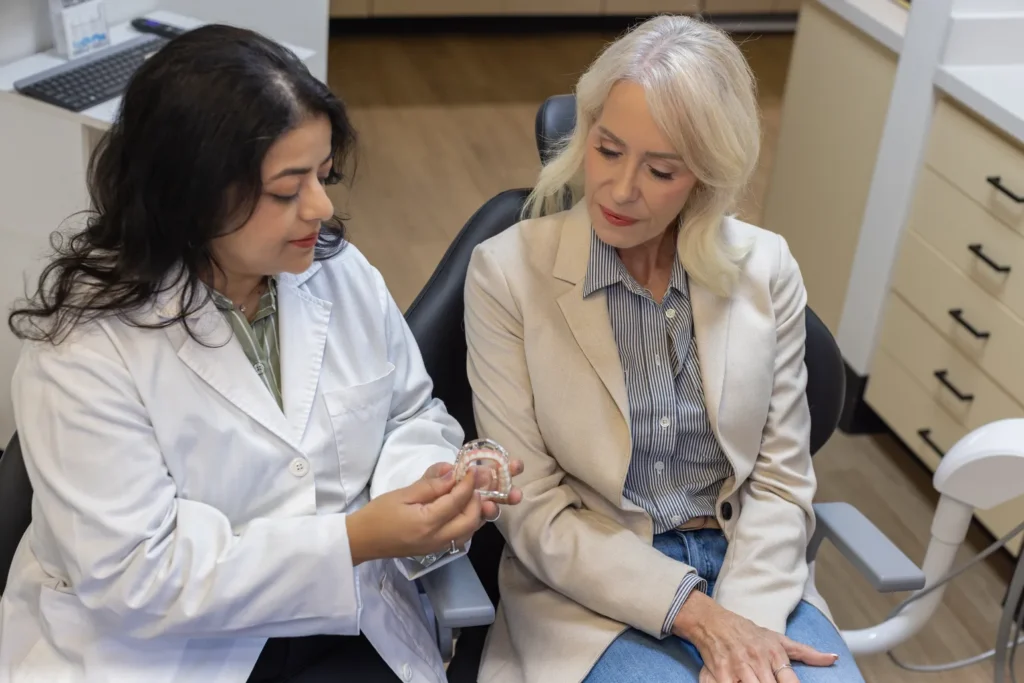
Dentures are removable or fixed appliances used to replace missing teeth and restore your ability to eat, speak, and smile comfortably. With modern materials and precise design, dentures provide a natural appearance and improved function.
Types of Dentures
Your treatment plan will depend on the number of missing teeth and your overall oral health.
- Full Dentures Replace an entire arch of missing teeth for a complete smile.
- Partial Dentures Replace several missing teeth while preserving remaining natural teeth.
- Immediate Dentures Placed right after tooth removal to maintain appearance and function.
- Hybrid Prosthesis Fixed denture supported by implants for added stability and comfort.
Denture Relining
Denture relining adjusts the inner surface of your denture to improve fit and comfort as your gums and jawbone change over time. This helps maintain proper support and prevents irritation.
Full Dentures
Full dentures replace all teeth in the upper or lower arch. They are custom-made to fit your mouth and restore both function and appearance.
Partial Dentures
Partial dentures are used when some natural teeth remain. They fill gaps and help prevent surrounding teeth from shifting.
Immediate Dentures
Immediate dentures are placed on the same day as tooth extraction, allowing you to maintain your smile without waiting for healing.
Hybrid Prosthesis
A hybrid prosthesis is a fixed denture supported by dental implants, offering improved stability, comfort, and function compared to traditional removable dentures.
Benefits of Dentures
Dentures provide a practical and effective way to restore your smile and quality of life.
- Restores Function Eat and speak more comfortably.
- Improves Appearance Support facial structure and natural look.
- Custom Fit Designed specifically for your mouth.
- Flexible Options Choose between removable and implant-supported solutions.
Are Dentures Right for You?
If you are missing multiple teeth or an entire arch, dentures may be an effective solution. A consultation will help determine the best type based on your needs, preferences, and oral health.
Restore your smile and confidence—schedule a consultation to explore your denture options.
Dentures FAQ
- What are dentures?
- Dentures are custom-made removable or fixed prosthetic appliances designed to replace missing teeth and, in the case of complete dentures, the surrounding oral tissues. Complete dentures replace an entire arch of teeth, while partial dentures replace multiple missing teeth while using the remaining natural teeth for support. Modern dentures are fabricated to restore chewing function, speech, facial support, and smile aesthetics while providing a natural-looking tooth arrangement and customized fit.
- What type of dental professional would I see about getting dentures?
- A dentist evaluates your oral health, remaining teeth, gums, jawbone, bite, and overall treatment needs to determine which type of denture is appropriate. During the initial consultation, the dentist may assess tooth loss, periodontal health, available alveolar bone, occlusion, and facial proportions before recommending complete dentures, partial dentures, or an implant-supported option. Digital imaging, dental impressions, intraoral measurements, and other diagnostic records may be used to develop an individualized prosthetic treatment plan.
- When would a dentist recommend getting dentures?
- A dentist may recommend dentures when multiple or all natural teeth are missing or when remaining teeth cannot be predictably restored. Complete dentures can replace an entire upper or lower dental arch, while partial dentures can replace several missing teeth while preserving and utilizing suitable natural teeth. Dentures can restore mastication, speech, facial support, and smile aesthetics while providing a non-surgical tooth-replacement option for patients who may not be candidates for or may not prefer dental implants.
- What are some alternatives to dentures, and when would each be the most appropriate option?
- Common alternatives to conventional dentures include dental implants and fixed dental bridges. A dental implant is a titanium or other biocompatible implant fixture placed in the jawbone to function as an artificial tooth root and support a crown, bridge, or implant-supported denture. A fixed dental bridge replaces one or more missing teeth by attaching prosthetic teeth to adjacent supporting teeth or implant abutments. The appropriate option depends on factors such as the number and location of missing teeth, periodontal health, available alveolar bone, bite, overall oral health, treatment goals, and budget.
- What types of dentures are there?
- The primary types of dentures include complete dentures, partial dentures, and implant-supported dentures. Complete dentures replace all teeth in an upper or lower arch and rest on the underlying oral tissues. Partial dentures replace several missing teeth and may use clasps or other components to connect to remaining natural teeth. Implant-supported dentures use dental implants as anchors to improve retention and stability, reducing movement during chewing and speaking. Some implant-supported prostheses are removable, while others are designed as fixed full-arch restorations.
- How are dentures made and what materials are used?
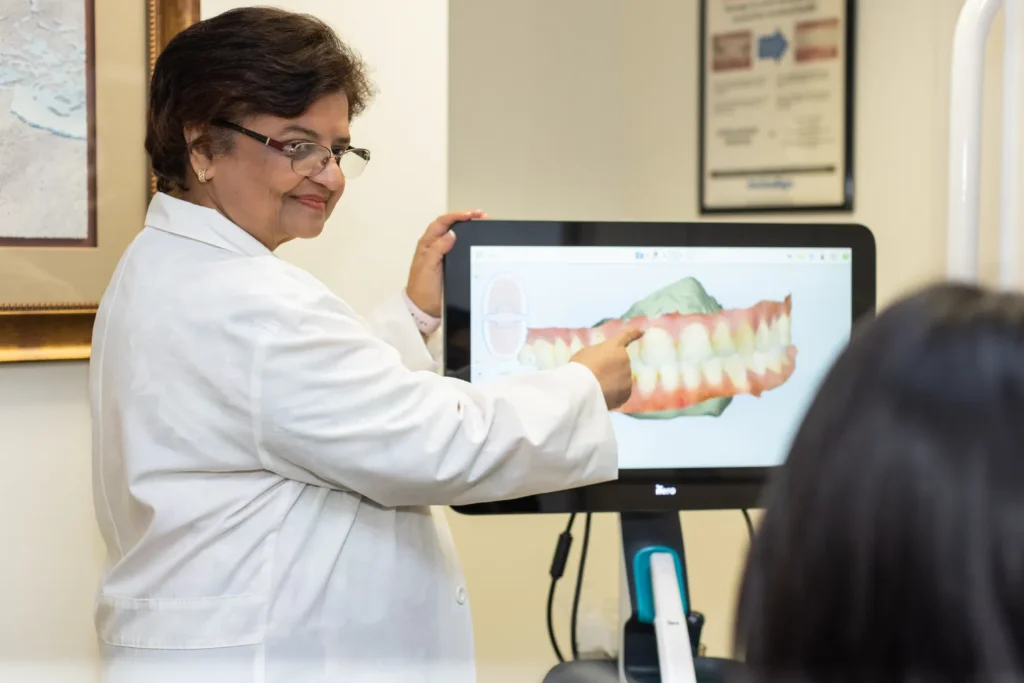
- Dentures are custom fabricated using clinical measurements, dental impressions or digital scans, bite records, tooth-selection information, and laboratory fabrication techniques. Depending on the design, denture bases may be made from acrylic resin or other denture-base materials, while replacement teeth are commonly fabricated from acrylic or other dental prosthetic materials. Partial dentures may also incorporate metal or resin framework components and clasps. Smart Smile Dental works with dental laboratories and trained dental technicians to customize the fit, tooth position, color, shape, and overall appearance of the prosthesis.
- What happens during the denture placement procedure?
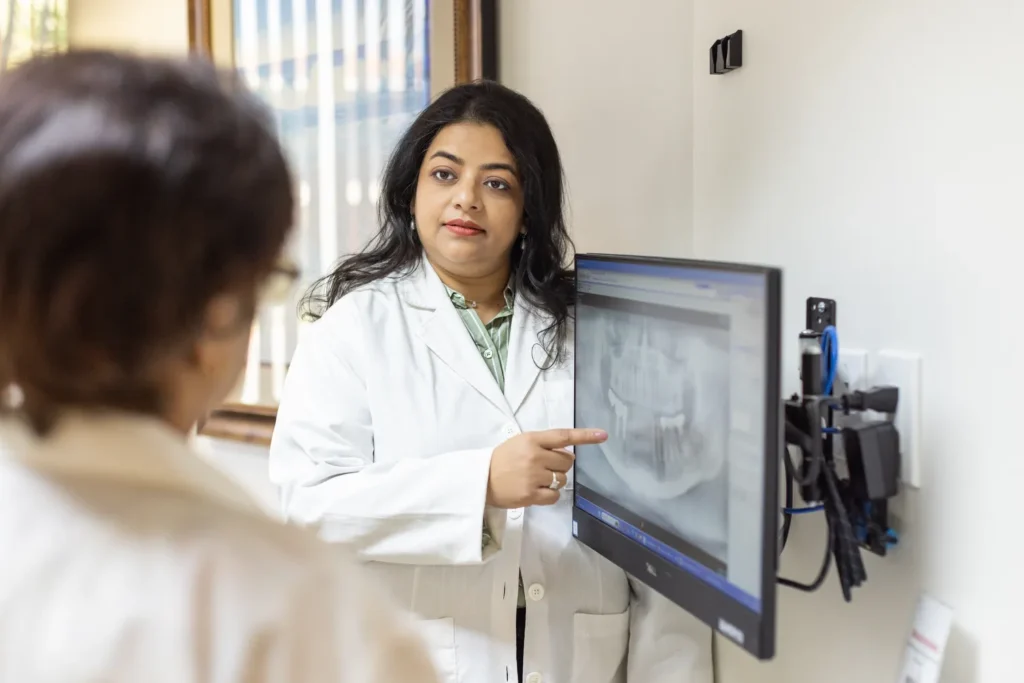
- The denture process begins with a comprehensive examination of the teeth, gums, jawbone, bite, and overall oral health. Depending on the patient’s situation, diagnostic records may include dental X-rays, CT or other three-dimensional imaging, impressions, digital scans, and precise measurements of the dental arches. The dentist uses these records to determine the appropriate denture design and prosthetic tooth arrangement. If extractions or other surgical procedures are required before placement, the treatment plan may include local anesthesia or sedation followed by appropriate healing before the definitive denture is delivered.
- Is getting dentures painful?
- Receiving a conventional denture is generally not painful because the prosthesis is fitted over the existing oral tissues rather than surgically placed. However, some patients may require tooth extractions, alveolar ridge preparation, implant placement, or other surgical procedures before receiving their final prosthesis. Local anesthesia or sedation may be used when surgical treatment is necessary. During the initial adjustment period, mild gum tenderness, pressure points, increased salivation, or soreness can occur as the oral tissues adapt to the new denture.
- What anesthesia options will be available during the denture procedure?
- Anesthesia depends on the type of treatment required to prepare the mouth for dentures. A routine denture fitting generally does not require anesthesia. If tooth extractions, implant placement, bone grafting, or another surgical procedure is necessary, local anesthesia may be used to numb the treatment area, while sedation may be considered for patients undergoing extensive treatment or experiencing significant dental anxiety. The dentist will determine the appropriate anesthesia or sedation approach based on the procedure, medical history, and individual needs.
- What should I expect my dentures to look and feel like?
- Well-fitting dentures are designed to provide a natural-looking tooth arrangement while restoring facial support, chewing function, and speech. Because dentures are prosthetic appliances rather than natural teeth, there is typically an adjustment period while the muscles of the cheeks, lips, and tongue adapt to the new appliance. Initial sensations may include increased awareness of the denture, mild pressure, increased saliva, or difficulty controlling the appliance until the patient becomes accustomed to it. Adjustments can be made if specific areas cause discomfort or interfere with the bite.
- Is it more difficult to speak with dentures?
- Most patients can speak normally with dentures after an initial adaptation period. Because the prosthesis changes the contours of the palate, gums, and tooth surfaces, the tongue and surrounding oral muscles may need time to adapt to the new tooth positions. Speech may sound slightly different during the first several days or weeks, particularly with certain sounds. Reading aloud and practicing normal conversation can help accelerate adaptation, while professional denture adjustments can address problems related to fit, stability, or tooth position.
- Will having dentures affect my ability to eat and drink regularly?
- Dentures are designed to restore chewing and eating function, but patients may need to modify their diet temporarily while adapting to the prosthesis. During the initial adjustment period, softer foods cut into smaller pieces may be easier to manage. Patients can gradually introduce firmer foods as their chewing control and comfort improve. Implant-supported dentures can provide greater retention and stability than conventional removable dentures, which may improve chewing efficiency and reduce movement during meals.
- What is the best way to clean and care for dentures?
- Denture care depends on the type of prosthesis. Removable dentures should generally be removed and rinsed after meals when possible, then gently brushed using a soft-bristled denture brush and a non-abrasive denture cleanser. Regular toothpaste can be abrasive and may scratch some denture surfaces. Dentures should be kept moist when they are not being worn and may be soaked overnight in a dentist-approved denture-cleaning solution. The gums, tongue, and remaining natural teeth should also be cleaned daily to control plaque and maintain oral health. Implant-supported and fixed prostheses require additional cleaning around the implant components and supporting tissues.
- What special care should I take for my mouth and gum after getting dentures?
- Patients should continue cleaning their gums, tongue, palate, and any remaining natural teeth even when wearing complete dentures. If extractions, implant placement, bone grafting, or another surgical procedure was performed before denture placement, additional postoperative instructions may apply while the gingival tissues and underlying alveolar bone heal. Patients should report persistent gum irritation, ulceration, bleeding, swelling, or areas where the denture repeatedly rubs the tissue. Regular dental examinations allow the dentist to evaluate the oral tissues, denture fit, bite, and condition of any remaining teeth or implants.
- How long will dentures last?
- The lifespan of dentures varies according to the type of prosthesis, material, oral anatomy, daily wear, cleaning habits, bite forces, and changes in the underlying gum and bone tissues. Smart Smile Dental notes that some dentures are intended to be temporary while others are designed for longer-term use. Conventional dentures may eventually require adjustment, relining, repair, or replacement as the alveolar ridge changes shape over time. Implant-supported dentures can also require maintenance or replacement of prosthetic components. Regular dental evaluations help determine when a denture no longer provides an appropriate fit or function.
- What if my dentures need restoration, replacement or repair?
- Damaged or poorly fitting dentures may sometimes be repaired, adjusted, or relined, while severely worn or structurally compromised prostheses may require replacement. Common issues include fractured denture bases, damaged prosthetic teeth, loose fit, worn occlusal surfaces, and changes in the shape of the underlying alveolar ridge. A dentist should evaluate the appliance before any repair is attempted because an adjustment may be more appropriate than replacement, depending on the condition of the denture and the patient’s oral anatomy.
- How long will it take for my mouth to heal and get used to dentures?
- The initial denture adjustment period is typically about two weeks, although the exact timeframe varies according to whether teeth were recently extracted, the type of denture, the condition of the gingival tissues, and the patient’s ability to adapt to the prosthesis. When extractions are involved, the gums and underlying alveolar bone require additional time to heal and remodel. During the adaptation period, patients may experience mild soreness, increased salivation, altered speech, or changes in chewing patterns. Follow-up adjustments can improve comfort and fit as the tissues stabilize.
- What is the cost of dentures and will insurance help pay for them?
- The cost of dentures varies according to the type of prosthesis, number of teeth being replaced, materials selected, laboratory fabrication, preparatory dental procedures, and whether dental implants are incorporated into the treatment. Many dental insurance plans provide some coverage for dentures, but benefits vary by plan and may include deductibles, coinsurance, annual maximums, waiting periods, or limitations on replacement frequency. A personalized treatment estimate can clarify the expected cost and applicable insurance benefits before treatment begins.
- When should I schedule an appointment for dentures?
- You can schedule a denture consultation as soon as you are experiencing tooth loss, difficulty chewing, changes in speech, denture discomfort, or concerns about replacing missing teeth. During the consultation, the dentist will evaluate your remaining teeth, gingival tissues, jawbone, bite, facial proportions, and overall oral health to determine whether complete dentures, partial dentures, or implant-supported dentures are appropriate. Diagnostic imaging, dental impressions, digital scans, and other measurements may be used to develop a customized prosthetic treatment plan. Smart Smile Dental recommends scheduling a consultation so your tooth-replacement options can be evaluated based on your individual needs.
DR. LORI BAGAI, DDS
Learn More